

Bangladesh at a crossroads: What a Tarique Rahman era may mean
Bangladesh at a crossroads: What a Tarique Rahman era may mean
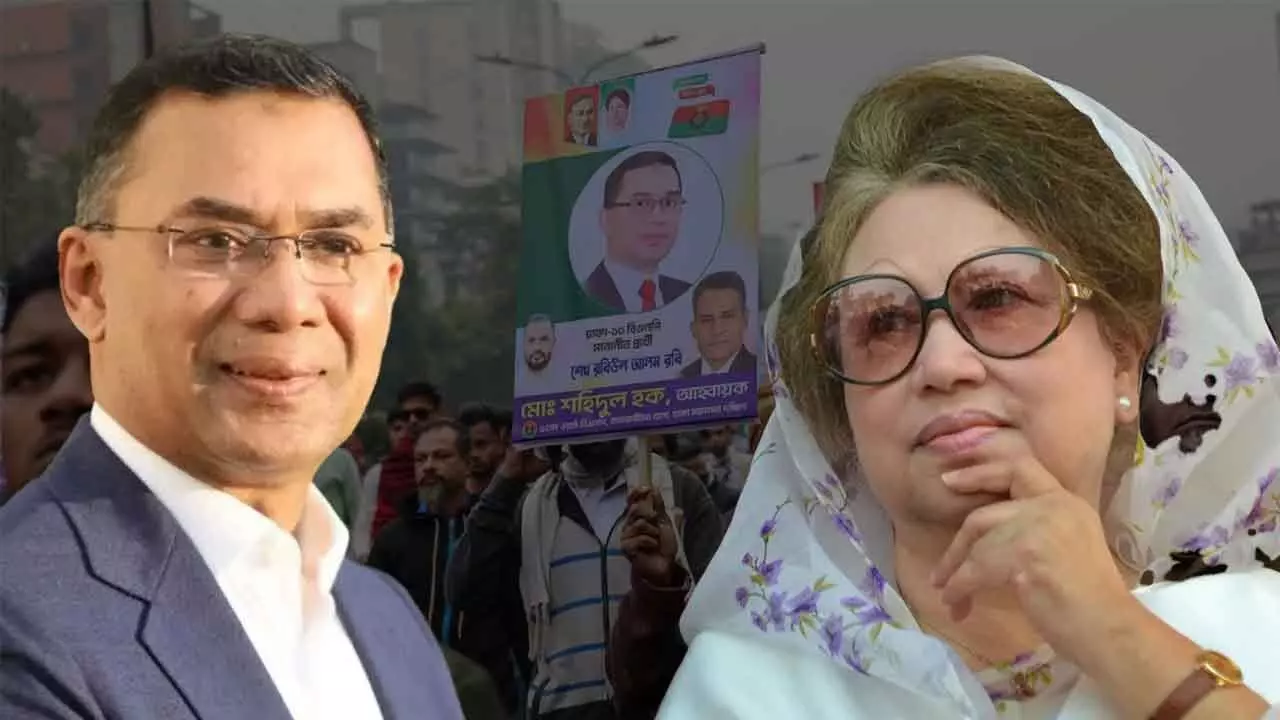
Bangladesh stands at an inflection point. In a region where history weighs heavily and geopolitics moves swiftly, the prospect of leadership under Tarique Rahman invites both anticipation and scrutiny.
If signals emanating from the Bangladesh Nationalist Party (BNP) are to be read with care, the governing grammar of tomorrow’s Bangladesh may well be defined by three imperatives: economic stability, institutional repair, and regional equilibrium, feels Shahin Babu, a seasoned journalist, editor and media activist, based in Dhaka.
The vocabulary is neither revolutionary nor romantic. It is resolutely pragmatic.
At home, the economy will demand first attention. Bangladesh’s hard-earned growth story has been shadowed by inflationary strain, currency pressures, and uneven job creation.
A Rahman premiership would likely seek to restore confidence through expanded private investment, renewed encouragement of entrepreneurship, and diversification of export markets beyond their traditional anchors. Remittances—the silent lifeline of millions—would need both protection and innovation.
Containing inflation and defending the purchasing power of an increasingly anxious middle class would not merely be economic choices; they would be political necessities, observes the former editor of BDTV, editor, News Vision Channel.
Yet economic management, however deft, cannot alone steady a republic. The deeper challenge lies in institutional credibility. Years of political contestation have left electoral bodies, regulatory institutions, and sections of the bureaucracy exposed to public doubt.
If the BNP’s rhetoric translates into policy, we may see a deliberate attempt to insulate the judiciary and oversight agencies from overt political interference. Such reforms are less glamorous than headline-grabbing projects, but they are the quiet architecture of durable governance.
Trust, once eroded, returns only through consistency and restraint, feels Babu. Security, too, will remain non-negotiable. Bangladesh’s stance of zero tolerance toward extremism has been a cornerstone of its recent stability. There is little reason to expect deviation.
Law and order, social cohesion, and counter-terrorism cooperation will likely be framed not as partisan achievements but as shared national safeguards.
Beyond the domestic horizon lies the more delicate theatre of regional diplomacy. Bangladesh’s geography offers no luxury of indifference. To its west, north, and east stands India—a neighbour of immense strategic, economic, and cultural weight. To the west lies Pakistan, bound to Bangladesh by history as complex as it is inescapable.
With India, a recalibration appears probable. Dhaka cannot afford rupture; nor can it accept asymmetry. The likely approach is one of measured engagement—cooperation that is need-based and interest-driven.
Trade, water-sharing, and border management will test diplomatic finesse. Transit and energy connectivity may resurface as bargaining chips in a broader “win-win” narrative. Security collaboration, especially in maintaining border stability and coordinating counter-terrorism efforts, will almost certainly endure, though perhaps framed in language that underscores parity rather than dependence.
The emphasis, if it materializes, will be on equilibrium without theatrics. Past tensions are neither forgotten nor weaponized; they are managed. The objective would not be to tilt away from New Delhi, but to steady the relationship on terms that resonate with domestic political sentiment.
With Pakistan, the dance is subtler. Historical associations between segments of the BNP and Islamabad are well documented, yet the future is unlikely to be scripted by nostalgia. Engagement may be cordial but limited—focused on trade, cultural exchange, and diplomatic civility rather than strategic intimacy.
Contentious historical debates are expected to recede into the background, not erased but deprioritized in favour of forward-looking pragmatism. Such balancing is no small art. In South Asia’s crowded chessboard, overreach invites suspicion; timidity invites irrelevance.
A Rahman-led Bangladesh, if guided by the signals currently discernible, would attempt neither bravado nor retreat. Instead, it would pursue a realism anchored in national interest, wary of ideological grandstanding.
In the end, the true test will not lie in speeches or signals, but in outcomes: inflation tempered, institutions steadied, neighbours engaged without entanglement. Bangladesh’s next chapter may not be dramatic. But it could, if handled with discipline, be quietly decisive.





